.avif)
At the Venice Architecture Biennale, one often feels that we already have all the brilliant ideas and solutions for the housing or environmental crises; we are just not implementing them. In Denmark, however, it seems you are actually succeeding—at least partially. What is the key to closing this gap between vision and reality?
Actually, I think we still have a long way ahead of us. In Denmark, we're always trying to find new solutions instead of reusing what we already have. But in some ways, a new solution is actually looking backwards—finding old solutions that you have to rethink for the basic environment. In our studio, we kept the old solutions for a very long time. Instead of reinventing them, we just stuck with the same idea about environmental honesty and social structures. I think that the future did find Vandkunsten again after 50 years. We are just reinventing how we used to do, because we don't have to use all these new materials. We are not afraid of new materials—but the constant search for new “sustainability fixes” that are meant to save us is not always the answer.
Concepts like social sustainability or participatory housing still sound like a complete utopia in the Czech Republic. How difficult was it to push these ideas through? Do you find yourself acting more as an architect, or as a political negotiator?
Developing new areas in Denmark is not easy. Over many years we developed tools that are also political; we use regulations and our studio has always been working on how to talk with the politicians. We need them to make new rules. Sometimes you just have to lead by example—build solutions and then show them to the politicians and say: „We can actually do it right“. The built environment is a slow-functioning topic. You have to have patience and be extremely stubborn.
In Copenhagen we have something called Fingerplan (urban development plan). Last year we won the competition about how to further develop this plan, and the politicians invited us into the Parliament to discuss how to develop the city. I am also on the board of Danske Ark (the Danish Association of Architectural Firms), so I do a lot of political work to push the boundaries. As an architect, I push the boundaries in the projects. We are fortunate that at Vandkunsten, we have developers who come to us specifically for new solutions. If they want the standard of what everybody is building at the moment, they don't come to us. But building a house is never just the architect. Architects in Denmark are only 1.3% of the whole construction environment. To make our voices heard, we need to collaborate with like-minded engineers and developers.
Vandkunsten is known for its focus on community. How does your philosophy translate into the actual life of a building?
At Vandkunsten, we don't want to design objects; we want to design communities. We have to see architecture as collaboration and open work where everybody can participate. Finalizing a house for me is to see it live its life with the people. I don't care if they put a new window in it, because it's part of the structure. We want to build with materials that last, or a structure that you can replace without tearing down big parts of it. Disassembly is something we always did. It has a „time depth“—what somebody did 30 years ago and what people are actually living with now.
Using recycled materials often means accepting a different kind of aesthetics—patina, imperfection, or visual diversity. How do you persuade clients and future residents to embrace the beauty of reused elements?
In Copenhagen, you now need to have a very low carbon footprint, so you are forced to reuse materials. I have a presentation for developers where I explain how real materials, like wood, change over 15 years—how they get grey or black before they reach a silver patina. Real estate always wants the „new“ to look like that forever, but that's never going to happen.
I love textures, so at our studio, we always go for real materials. When you sit next to a window, the frame should be in wood because it’s nicer to touch. What your hand meets along the way—like a handle or a timber railing when you stand on your balcony—should be honest, and ideally the main structure of the building should be visible—especially if it is wood. If you explain the story behind the material, it becomes a history the residents can tell when their friends visit. It is about educating the developer and the public that „new and shiny“ is not the only way.
.avif)

The Tingbjerg project shows a sensitive path for revitalizing modernist housing. In the Czech Republic, we have many similar estates that are often seen as problematic. Should we stop thinking about demolition and start seeing these areas as opportunities?
At Vandkunsten, we have a goal that we don't want to demolish anything. Your huge buildings in the Czech Republic should not be demolished; we have to rethink the structures.
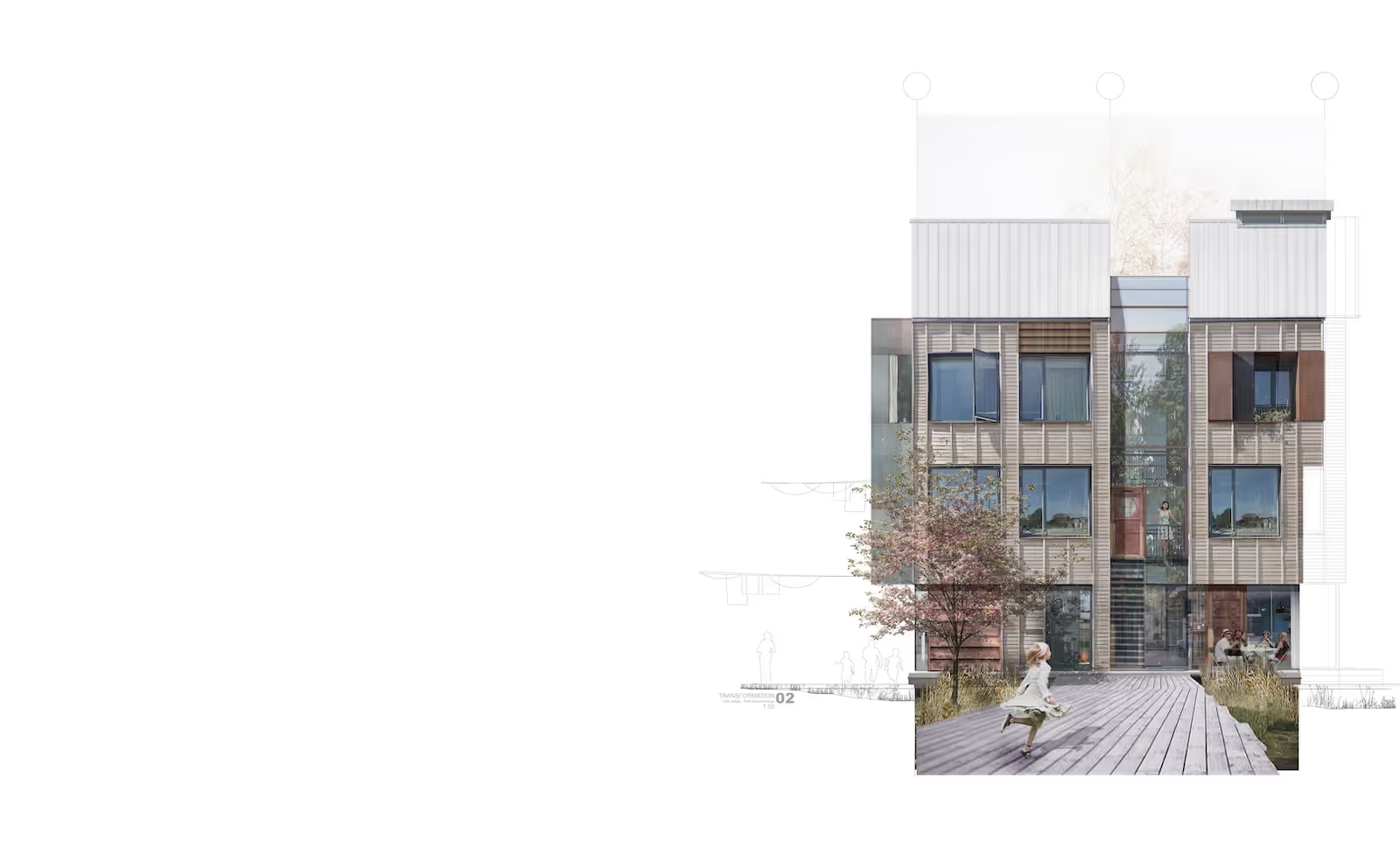
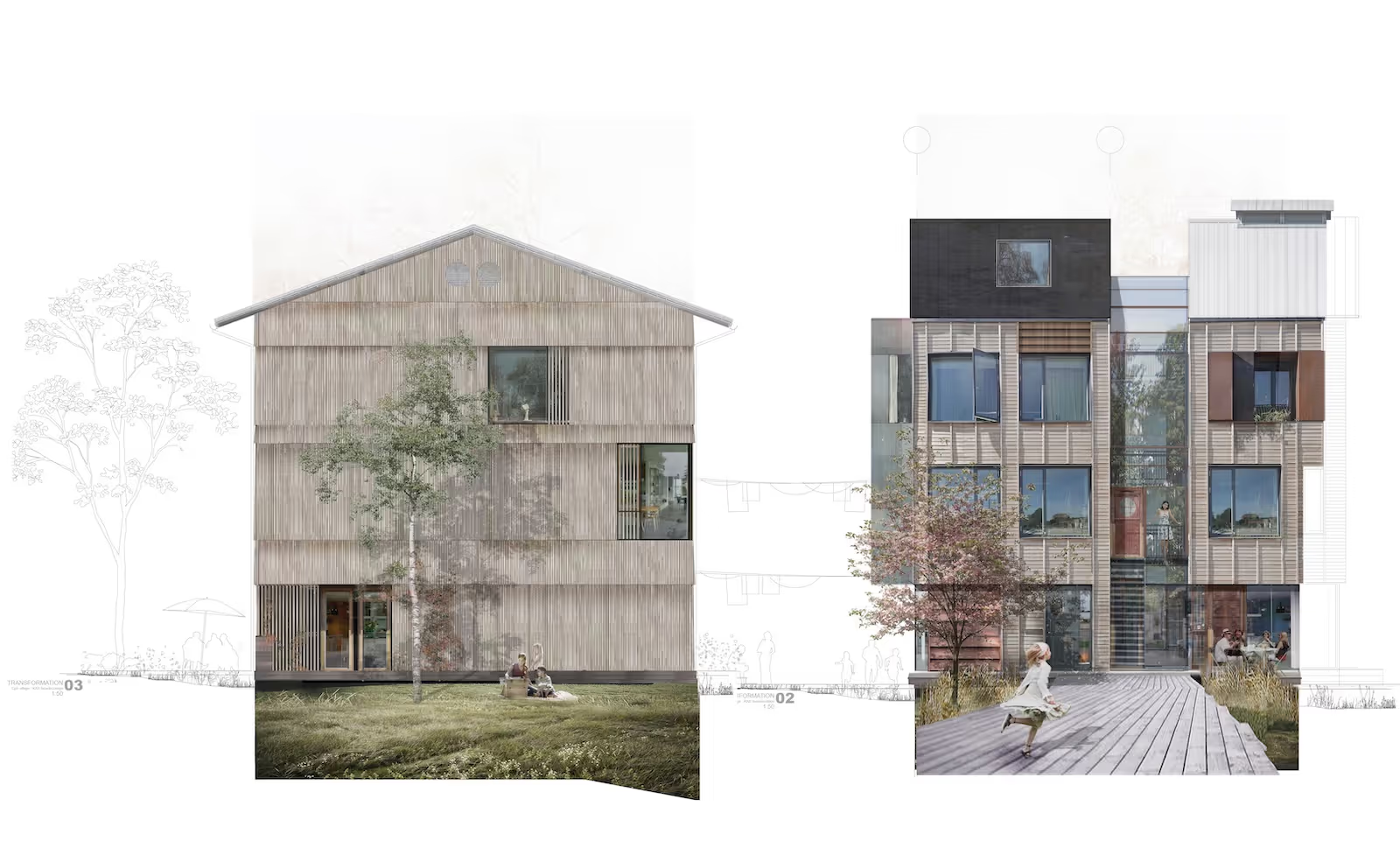
In Tingbjerg, we looked specifically at every courtyard to create new communities. We used timber structures in between, but these should never be overwhelming for the people already living there. People were scared when we started because politicians had talked about demolishing their houses. We had many meetings to make people feel safe and heard.
As architects, we can actually make it easier to be neighbors. Living close by each other often means conflicts, and your design has to look at how to make those conflicts easier for people. For instance, having a good solution where you put your trash is a very important assignment because that is where you meet your neighbors.
For me, some of the most meaningful projects are those where you can actually see you make a difference. My father is a refugee, and for me, having an everyday life where everybody—no matter what income you have—lives together, is the most beautiful reflection of what architecture can really offer. Tingbjerg was on the ‘Ghetto list’ and had a bad reputation. But when you add materials that look like they have been cared for—like warm timber or specific brickwork—the area starts to change its identity. Architecture can be a tool to remove a stigma. If you design the entrance of a building with real care, for instance, the people living there will start to care about the whole place too. But it’s not only about materials — it’s also about how you feel safe. For example, windows from the kitchens facing the entrances and arrival areas can create a sense of security, because you feel seen and know that help is nearby if needed.
In the CPH Village project, you collaborated on mobile student housing. Does this represent a new way of thinking about materials and permanence?
In CPH Village, they use land that is waiting for something else. It is mobile architecture. We collaborated with them on a research project focused on how to reuse these temporary structures, and we used recycled materials, like floorboards from an old gym. The students live there for five to ten years, and then the whole village can be moved somewhere else. We always wanted to be honest about the materials. If you have a wooden structure, it should look like wood. If you have a joint detail, you should be able to see how it’s put together. Because if you can see how it’s put together, you also know how to take it apart. It’s about not waiting for the 'perfect' permanent solution, but acting now with what we have.
Another of your important projects, Enghave Brygge, looks like a typical developer development at first sight. What makes it special?
Enghave Brygge is almene boliger (public housing), which is a rental system where everyone can apply to be on a waiting list, and every fifth Dane lives in it. The rent is fixed because the government supports the projects through organizations that manage these residential areas. In Copenhagen, 20% to 30% of each area is required to be this type of housing.
Usually, rich people live towards the water, and it's annoying that the worst piece of land is often given to public housing. But Enghave Brygge has one of the best plots, surrounded by water. It consists of 312 dwellings and includes co-housing units where we apply our rule to give the best situated ground area—like the evening sun next to a park—to everyone as a shared space. There are two coliving units, each with about 18 to 20 dwellings that share a big kitchen, guest houses, and offices. We compressed the individual units as much as we could to consume less without losing quality of living, while using shared environments to keep the community connected.
Despite these projects and the public housing system, is Copenhagen also experiencing a housing crisis similar to other European cities?
Yes, prices are skyrocketing. Housing has become an investment, like in London. If it's easy to invest in apartments and if it's allowed to have 350 square meters, to consume that amount and if we don't tax what you earn from housing, it’s a big problem. We need smaller housing and rethink how we can densify the areas we already have.
What is your one piece of advice to Czech architects?
We need to learn how to work together. Architects have to show politicians how architecture can improve people’s quality of life and help lift neighbourhoods up. But we also need political support to make architecture part of the green transition — not only socially sustainable, but environmentally sustainable as well.
That means creating the right incentives for transformation and setting regulations that reduce emissions. The “carrot” should be that by building and transforming differently, we are also helping solve some of society’s bigger problems: housing, climate, loneliness, inequality, and quality of life.
You have to be incredibly stubborn when you try to change the system.
And another thing: In Denmark, we have an overconsumption; our overshoot day was in March. In the Czech Republic, you have it in May. You are actually better than us. Don't go for the goal where you want to have the same as in Denmark, because we are actually worse. If you already live in smaller spaces, look into how to make them better, not bigger. You are already one planet ahead of us.